The Numbers That Sound Big Until You Read The Fine Print
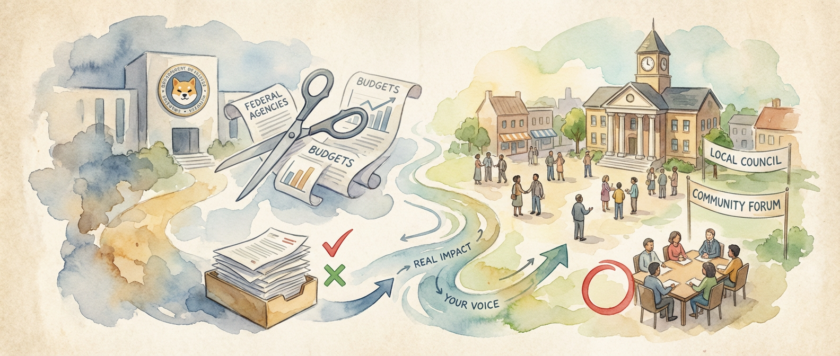
When the Department of Government Efficiency launched in January 2025 under executive order, the headline figures were hard to ignore. Over one trillion dollars in potential federal savings identified by mid-year. That’s a number designed to stop you mid-scroll. It’s designed to feel decisive, transformative, proof that someone finally took a hard look at waste and acted. The only problem is that the Congressional Budget Office, the nonpartisan arbiter of federal spending claims, scored the actually verified savings at a fraction of that estimate. This gap between claimed and confirmed is not a small accounting detail. It’s the first and most important structural lesson: understanding what gets counted as “government efficiency” requires looking past the headline number to the methodology underneath.
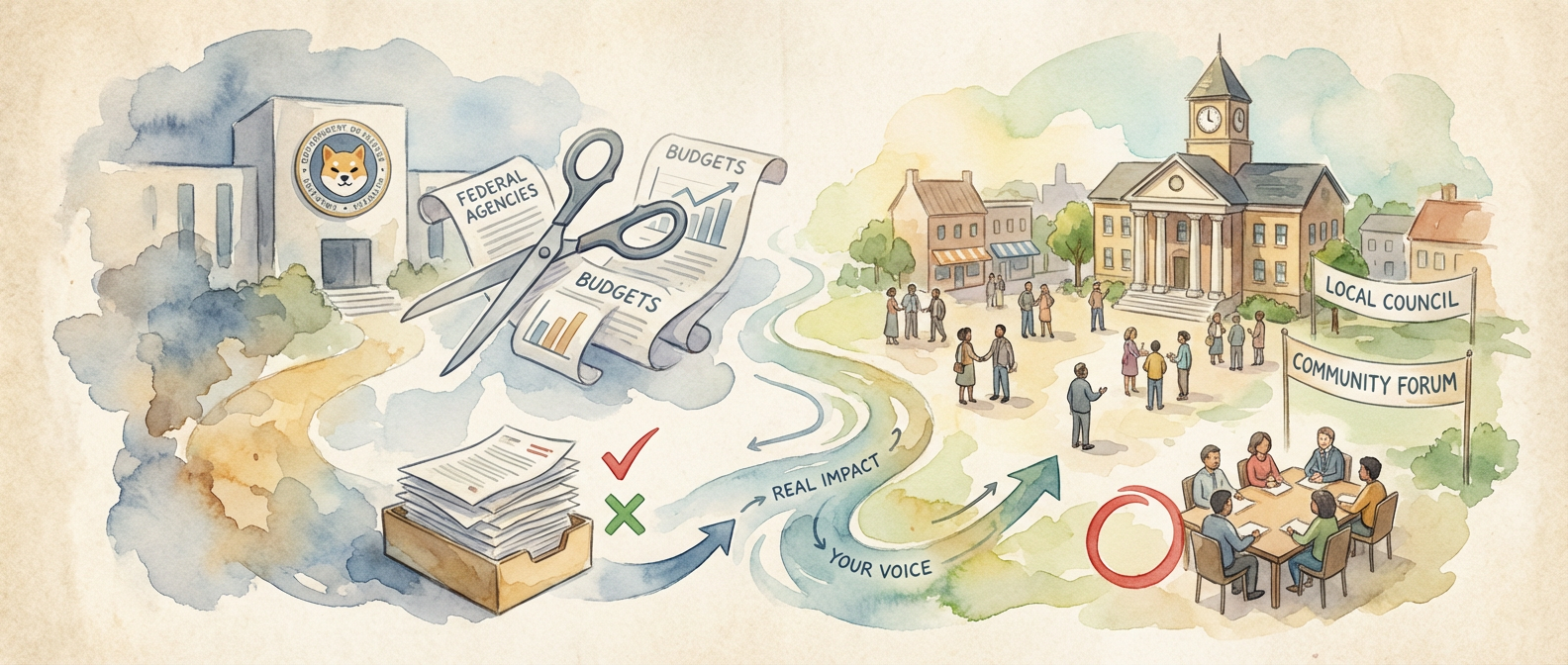
The difference between a trillion-dollar claim and the CBO’s verified figure tells you something crucial about how efficiency initiatives get framed in American political life. When you see those dramatic numbers in your news feed, ask yourself what changed in the real economy. Did your local food bank suddenly have more resources? Did your city’s infrastructure budget expand? This is not cynicism. This is structural analysis. The gap between rhetoric and results exists in how these programs measure success, and understanding that is half the battle in becoming an informed citizen.

The Federal Workforce Reductions: Where the Rubber Actually Hits the Road
If the trillion-dollar claim is the headline, the federal workforce reductions are where you can actually track change happening. According to Office of Personnel Management data, approximately 75,000 federal employees accepted deferred resignation offers in the first quarter of 2025 alone. That is a real number. Real people left their jobs. That has real consequences. Some of those employees were in administrative roles where redundancy existed. Some of them were field agents, inspectors, grant administrators, and caseworkers whose positions directly affected service delivery. The problem with broad workforce reduction targets is that they are structurally indifferent to which category you’re cutting from. When you set a percentage-based reduction goal across an entire agency, you lose the ability to preserve critical functions while eliminating genuine waste.
The Congressional Budget Office Federal Workforce Analysis 2025 provides useful context here. Not all federal positions are created equal. A clerk processing paperwork operates in a different role than a Social Security disability examiner processing claims for people waiting years in the queue. Wholesale reductions do not distinguish between these roles. They work like a river flood. Water doesn’t know which buildings were built to code. It simply goes where gravity allows. In this case, gravity meant that many localities lost the human infrastructure required to administer federal programs, regardless of whether those programs themselves were efficient or not.
The Cascade Effect: Federal Cuts Become Your City’s Problem
This is where local government enters the story, and where your attention becomes genuinely urgent. The National Association of Counties documented that federal grant eliminations tied to DOGE reviews forced at least 23 states to restructure local social service delivery programs in 2025. Think about what that sentence actually means. It means that somewhere around the country, a county board had to sit down and recalculate what services they could provide their residents because the federal funds those services relied on disappeared. It means difficult conversations about whether to cut services, raise taxes, or reallocate existing budgets. It means your city council and county commissioners suddenly inherited problems that originated from decisions made 2,000 miles away.
Budget officers in Denver, Columbus, and Memphis went public with the specifics. Mid-cycle funding gaps ranging from 40 million dollars to 180 million dollars directly linked to federal program disruptions. These are not theoretical numbers. These are gaps that force real choices. Do you cut bus service? Close recreation centers? Reduce police response times? Freeze hiring for critical positions? There’s a real irony here. An efficiency initiative at the federal level became an inefficiency crisis at the local level. It’s the classic case of how systems-level problems require systems-level thinking, and when you apply a hammer at the top, the nails get driven down to the foundation.
What The Public Actually Feels: The Gap Between Belief and Experience
A Pew Research Center survey from October 2025 captured something important about how Americans are processing this. Fifty-four percent believed DOGE had some or significant impact on government waste. That is majority sentiment. That matters. But only 31 percent said federal services in their community had improved. This gap is telling you that citizens accept the theoretical case for efficiency while observing no practical benefit in their daily lives. They are watching their local government scramble to fill budget gaps. They are seeing community services disrupted. And they are being asked to believe this is all part of a coherent plan.
This gap between belief and experience is the central political fact of the moment. It suggests that efficiency narratives, no matter how well intentioned, must eventually reckon with whether they produce better service delivery at the place where citizens actually experience government. A more efficient bureaucracy that delivers less is not efficiently organized. It is differently organized, in a way that transfers burden to other actors. Whether that transfer is justified depends entirely on whether those other actors have the capacity to absorb it. Most city councils do not.
Your City Council Is Now the Real Battleground
This is where you come in, and where your attention to local politics becomes not just civically virtuous but practically necessary. The decisions that will determine whether your community emerges from this period with better service delivery or reduced service delivery are happening in city council chambers and county commission meetings. These are the venues where budget amendments get proposed. These are the meetings where you can actually understand how federal policy changes translate into local consequences. And these are the places where your voice still has proportionally more weight than it does in Washington.
I want to be direct about this. Reading about DOGE policy at the national level is useful for understanding the broader context. But understanding how that policy lands in your specific municipality requires doing the harder work of local research. Look at your city budget. Find the line items that were previously federally funded. Track which programs lost money. Show up to budget hearings. Ask your representatives what they are doing to address the gaps. This is not partisan work. This is structural work. Understanding how your government actually functions, and where the pressure points are, gives you the information you need to advocate effectively for what your community needs.
The DOGE initiative will be evaluated by historians and economists for decades. But you do not need to wait for that assessment. You can evaluate it right now by looking at whether your community’s schools, social services, and infrastructure are performing better or worse than they were before. That is the real report card. And the only people who can complete it are the ones paying attention to what your local officials are actually doing about it.