
The Quiet Revolution Nobody Expected
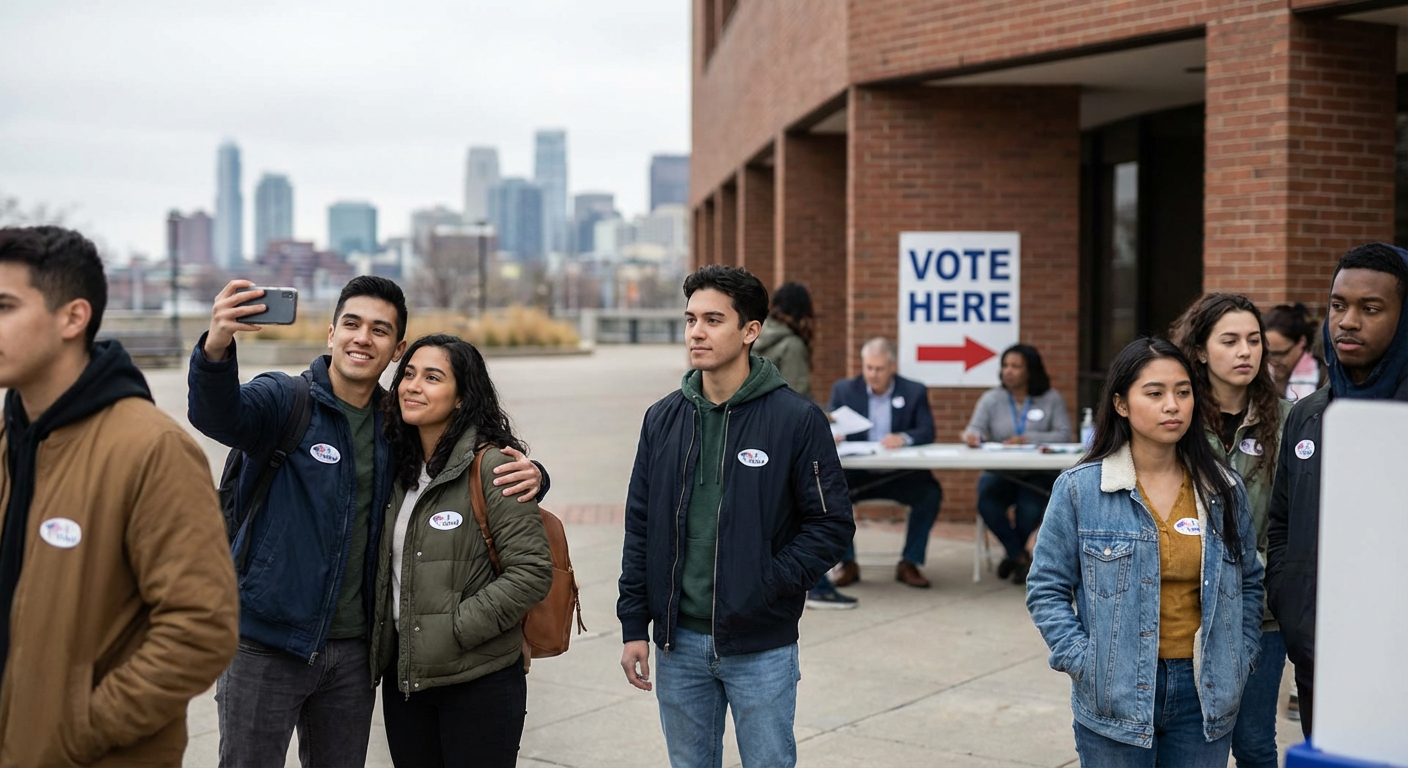
Something unusual happened in American cities between 2024 and 2026. While national politics commanded every news cycle and cable segment, young voters were busy remaking the actual machinery of local governance. The shift wasn’t dramatic in the way a presidential upset might be. It was slower, more methodical, and ultimately more durable. Gen Z voters didn’t just show up to elections in record numbers. They showed up with specific ideas about what ballot initiatives should accomplish and how voting itself should work.

This matters historically because we’ve seen this pattern before, though never quite like this. The Progressive Era of the early 1900s brought us ballot initiatives and referenda as tools to bypass corrupt machine politics. The civil rights movement of the 1960s used ballot measures to challenge discriminatory laws. What’s different now is the scale of youth engagement with these mechanisms, and the speed with which they’re moving them from marginal policy concerns to mainstream political infrastructure.
We’re not talking about isolated victories in college towns. Voters aged 18 to 27 drove turnout increases of 12 to 15 percentage points over 2021 levels in major cities including Philadelphia and Denver. That’s the kind of shift that changes what’s possible on a ballot.
A New Generation Discovers (or Rediscovers) Ranked Choice Voting
One concrete way this generational shift is reshaping local politics involves a voting method most Americans had never heard of five years ago: ranked choice voting. In November 2025, seven new jurisdictions adopted RCV through ballot initiatives, bringing the total number of U.S. places using the system to over 60. For the uninitiated, ranked choice voting lets voters list candidates in order of preference, with votes reallocated if their first choice is eliminated. It sounds technical. It is. But Gen Z voters have embraced it as a solution to what they see as a broken system of binary political choices.
Why should you care about this? Because voting method reforms are typically the domain of political scientists and electoral nerds. They pass quietly if they pass at all. Yet Gen Z treated RCV as fundamental to their vision of more responsive local government. They organized social media campaigns. They door-knocked. They built coalitions. The FairVote Ranked Choice Voting Implementation Tracker now documents a footprint that would have seemed impossible a decade ago.
What’s revealing is how this generation talks about RCV. They don’t frame it as a technical improvement. They describe it as an antidote to feeling voiceless. In their view, a voting system that forces choices between imperfect options is a voting system that doesn’t reflect how most people actually think. That’s a philosophical position with real political consequences.
Housing, Rent, and the Rise of Local Economic Populism
If ranked choice voting represents Gen Z’s structural critique of American politics, then housing and tenant protection initiatives represent their economic one. In 2025, ballot measures protecting renters passed in Austin, Texas and Minneapolis, Minnesota, driven substantially by voter coalitions under 30 years old. These victories arrived against significant opposition from landlord associations and development interests with deep pockets and political connections.
This is worth examining through a historical lens. The tenant rights movement of the 1970s and 80s was often led by older grassroots organizers. This time, Gen Z voters are leading similar fights using digital organizing and data-driven campaign strategies. They’re using ballot initiatives because they’ve learned that city councils, responsive to development interests, won’t act without electoral pressure. It’s pragmatism born from watching housing costs consume an ever-larger share of their paychecks.
The nonprofit Vote.org registered 1.2 million new voters aged 18 to 24 in the 12 months leading up to the 2025 elections. A significant portion of those newly registered voters cited housing costs as a primary reason they were getting involved. That’s not an accident. Gen Z has lived through the housing crisis their entire politically conscious lives. They’re not debating whether it exists. They’re voting on solutions.
When Local Matters More Than National
Here’s a finding that should reshape how political professionals think about engagement: according to the Harvard Youth Poll on Political Engagement, 52 percent of Americans aged 18 to 29 now say local elections matter more to them than federal elections. That’s a fundamental reordering of political priorities for an entire generation. It suggests something the data supports: Gen Z voters have concluded that the most direct route to change runs through city hall, not Washington.
This reflects a kind of sophisticated political calculation. Federal politics feels gridlocked to them. Presidential elections feel binary and unsatisfying. But local initiatives? Those let you vote directly on policy. You can argue for or against a specific proposal without choosing between two flawed candidates. You can participate in something that actually passes or fails based on votes, not obstructed by procedural rules or partisan gridlock.
The historical echo here is to the participatory democracy movements of the late 1960s and early 1970s, when young people similarly lost faith in national institutions and redirected energy toward local community control. The difference is that this generation is doing it at scale, across multiple major cities simultaneously, with significantly more demographic diversity and organizational infrastructure.
What Happens Next
If you’re paying attention to local politics in your own community, you should expect to see more of this in 2026 and beyond. The structural and philosophical commitments Gen Z voters are making through ballot initiatives are not one-time experiments. They represent genuine changes in what young voters expect from democracy. More ranked choice voting initiatives will appear on ballots. More economic populist measures around housing, wages, and worker protections will mobilize youth voters. More civic participation will be channeled through direct democracy mechanisms rather than representative institutions.
Does this guarantee positive outcomes? No. Ballot initiatives have real limitations. They can lock in bad policy just as easily as good policy. They can be manipulated by moneyed interests through misleading campaigns. They can fragment coalition-building. But the young voters driving this movement understand these trade-offs. They’re not naive idealists. They’re pragmatists who’ve decided that direct democracy, imperfect as it is, offers a better path forward than hoping representatives will listen.
The 2025-2026 ballot initiative season is the first national-scale demonstration of Gen Z political power. It’s worth studying not as a novelty, but as evidence of how a generation that came of age during institutional crisis is redesigning institutions to match their values. The outcomes will shape local governance for years to come. If you want to understand where American democracy is actually headed, watch your city council elections more closely than the presidential race. That’s where Gen Z voters are already looking.