The Green Transition’s Great Contradiction: Why Climate Urgency and Political Reality Remain on Collision Course

The Ticking Clock That Governs Everything

The Intergovernmental Panel on Climate Change has been pretty clear about this: we have until 2030 to get our act together on emissions, or we’re looking at catastrophic warming. That’s it. No extensions, no do-overs. This creates a really uncomfortable reality for politicians who are used to thinking in election cycles, not planetary deadlines. They’re trying to balance what voters want today against what the planet needs for survival, and honestly, it’s not going well.

Here’s the thing that keeps me up at night: fixing climate change requires the kind of massive, slow changes that normally take decades to pull off. But physics doesn’t care about our political timelines. The atmosphere is going to keep heating up whether we’ve figured out how to make carbon taxes popular or not. This disconnect explains why even the best climate policies feel like too much and too little at the same time. Too radical for most people to accept, too weak to actually solve the problem.

The Market Mechanisms We’ve Built and Their Problems

We’ve got carbon pricing covering about a quarter of global emissions now through cap-and-trade, carbon taxes, and various hybrid systems. That sounds impressive until you realize it means three-quarters of emissions are still running wild with no price tag attached. The systems we do have work okay in some places. The EU’s emissions trading system has actually moved the needle, and California’s program has had some success too.

But here’s where it gets frustrating. Even in the places where carbon pricing exists, the prices are usually way too low to drive the kind of rapid change we need. Politicians are terrified of making energy expensive because voters hate paying more for gas and electricity. I get it, but it means we’re basically playing around the edges while the house burns down.

The bigger problem is that carbon pricing only works if everyone does it. Otherwise, companies just move their dirty operations somewhere cheaper. We’ve created this patchwork of different rules and prices that’s easy to game. That’s why more countries are just saying “forget the market” and throwing government money directly at clean energy instead.

Industrial Policy’s Unexpected Comeback

Something interesting happened over the last five years. The US, EU, and China all decided to dump massive amounts of public money into clean energy manufacturing. We’re talking hundreds of billions of dollars. This is a big shift from the “let the market figure it out” approach that dominated for decades. Turns out, when you need to rebuild the entire energy system in ten years, the market needs some serious help.

The downside? Now everyone’s fighting over who gets to make the solar panels and wind turbines. What should be a global team effort to save the planet has turned into this weird competition where countries are slapping tariffs on each other’s clean energy stuff. According to the Climate Policy Initiative, this might speed up innovation, but it’s also making everything more expensive and complicated.

Politicians love this approach because they can point to new factories and jobs in their districts. That’s way easier to sell than carbon taxes that just make things cost more. But there’s a catch. Industrial policy tends to prop up whoever has the best lobbyists, not necessarily the best technology. We might end up subsidizing yesterday’s solutions instead of breakthrough innovations.

Justice, Equity, and Who Gets Left Behind

We can’t ignore this anymore: shutting down fossil fuel industries is going to devastate some communities. Coal miners in West Virginia, oil workers in Texas, people whose entire towns exist because of refineries. These aren’t abstract statistics. These are real people facing real economic hardship so the rest of us can have a stable climate. That’s a tough sell.

The same logic applies globally. Poor countries that barely contributed to climate change are getting hammered by droughts, floods, and storms. They managed to get rich countries to agree to a “loss and damage” fund at COP27, which was a big diplomatic win. But the fund is chronically underfunded because wealthy nations are reluctant to pay what many see as climate reparations.

This creates a real dilemma. Making the transition fair and just requires more money and more time. But we’re already running out of both. Carbon Brief climate analysis shows that comprehensive just transition policies often conflict with urgent emission targets. We need to find a way to move fast without throwing vulnerable people under the bus, and that’s proving incredibly difficult.

Corporate Promises and Empty Rhetoric

Every major company has a net-zero pledge now. Every single one. Oil companies, airlines, tech giants, you name it. They all have glossy reports with timelines and targets and promises to save the world. Some of this is genuine, and corporate leadership on clean tech has been really important. But a lot of it is also complete nonsense.

The problem is that many of these commitments rely on carbon offsets that are questionable at best. Planting trees that might get cut down later, or paying for projects that would have happened anyway. Others just push all the hard work off to 2040 or 2050, when current CEOs will be long gone. It’s accountability theater.

This matters because governments are counting on these corporate commitments when they make their own climate promises. When companies don’t deliver, it undermines the whole system. We need better ways to tell real corporate climate action apart from fancy marketing, but that’s easier said than done.

All of this brings us back to a fundamental question: can democracies make the hard choices necessary for climate action? We need policies that cost money today for benefits that might not show up for decades. We need to be honest about trade-offs instead of pretending we can have it all. What do you think? Can we pull this off, or are we kidding ourselves?

The Structural Forces Driving Nationalist Movements Across Democratic Societies

The Infrastructure of Political Transformation

Across democratic societies, nationalist movements have grown from fringe political forces into governing coalitions that shape policy on multiple continents. Eight European Union member states now include far-right parties within their governing coalitions, which is a major shift in how liberal democracy actually works. This change reflects deeper structural changes in how political power gets organized, distributed, and fought over in the digital age.

The rise of these movements can’t be explained by individual charisma or single election moments. Instead, it’s the result of technological infrastructure, economic dislocation, and institutional breakdown coming together to create new ways of mobilizing politically. These new pathways operate by their own logic, separate from the traditional left-right ideological frameworks that have dominated political analysis for decades.

Economic Displacement and Immigration as Mobilization Vectors

Contemporary nationalist movements recruit people through the intersection of economic uncertainty and demographic change. Communities hit by industrial decline, wage stagnation, and reduced social mobility become particularly open to stories that link their material circumstances to immigration patterns. This connection doesn’t just work as scapegoating. It provides a coherent explanatory framework for complex economic forces that otherwise seem beyond democratic control.

This mobilization strategy works because it offers concrete, visible explanations for abstract economic processes. Global supply chain restructuring, automation, and financialization create widespread economic pressures that are hard to address through traditional politics. Immigration, by contrast, is a tangible policy area where national governments still have apparent control, making it an attractive target for political movements promising restored agency.

This explains why economic anxiety alone doesn’t predict support for nationalist movements. Rather, it’s the combination of material insecurity with visible demographic change that creates conditions for effective political mobilization. The ECFR European politics analysis shows how this pattern repeats across different countries, suggesting structural rather than culturally specific causes.

Digital Infrastructure and Ideological Mainstreaming

Social media platforms have completely changed how political ideas spread and gain legitimacy. Research on online radicalization reveals systematic pathways that guide users from mainstream political content toward increasingly extreme positions. These pathways work through algorithmic recommendation systems that prioritize engagement over ideological coherence, creating what researchers call “recommendation rabbitholes” that can lead users toward radical content within relatively short timeframes.

The speed of ideological mainstreaming through digital platforms is a qualitative shift in how political discourse evolves. Previously fringe positions can achieve widespread visibility and apparent legitimacy through coordinated online campaigns that simulate grassroots support. This process bypasses traditional gatekeeping mechanisms like editorial oversight, academic peer review, and institutional fact-checking that historically slowed ideological change.

Social media dynamics reward provocative content that generates strong emotional responses, creating incentive structures that favor increasingly extreme positions. Moderate voices find themselves at a systematic disadvantage within platforms designed to maximize user engagement rather than promote democratic discussion. The result is an environment where radical positions appear more popular and mainstream than they actually are, creating feedback loops that can shift public discourse toward extremes.

Anti-Establishment Appeals Across the Political Spectrum

One of the most important structural features of contemporary nationalist movements is their ability to use anti-establishment rhetoric that resonates across traditional ideological boundaries. This rhetoric works not because it’s a coherent political program, but because it articulates widespread frustration with institutional performance across multiple domains simultaneously.

Anti-establishment appeals work because they can channel diverse grievances into a unified political narrative without requiring specific policy commitments. Voters concerned about corporate influence, government surveillance, media bias, and international trade agreements can all find elements of their concerns reflected in anti-establishment messaging, even when the underlying policy positions might conflict with their interests.

This explains why nationalist movements often draw support from constituencies that historically supported different political parties. The anti-establishment framework provides unifying logic that transcends traditional coalitional boundaries, allowing these movements to assemble winning electoral majorities from previously incompatible voter groups. Vox policy explainers have documented how this pattern appears across different democratic systems, suggesting common structural causes rather than unique national circumstances.

Institutional Pressure and Civil Society Constraints

The consolidation of nationalist political power creates systematic pressures on civil society organizations that historically provided checks on government authority. Funding restrictions, legal challenges, and administrative harassment are coordinated strategies to limit the operational capacity of organizations that monitor democratic governance, provide social services, or advocate for marginalized populations.

These constraints work through seemingly neutral administrative mechanisms that avoid direct confrontation with democratic norms while effectively limiting oppositional capacity. Mandatory registration requirements, foreign funding restrictions, and expanded definitions of political activity create bureaucratic barriers that consume organizational resources and limit effectiveness. The cumulative effect is to narrow the space for independent civic action without explicitly abandoning democratic procedures.

The systematic nature of these pressures suggests coordination across different national contexts, pointing toward shared strategies and mutual learning among nationalist movements. This coordination extends beyond electoral politics to include governance techniques, legal strategies, and communication methods that get adapted to local contexts while maintaining consistent underlying approaches.

Understanding these structural forces requires sustained analysis that moves beyond electoral cycles and individual political figures toward the deeper institutional and technological changes reshaping democratic politics. The complexity of these dynamics demands ongoing attention to the ways that political movements adapt to and reshape the infrastructure of democratic governance itself.

The New Digital Democracy: How Money and Algorithms Shape Modern Political Organizing

The Platform Economy of Political Engagement

Political organizing has moved online fast, changing how campaigns raise money, target voters, and shape public discourse. Nearly three-quarters of voters under 35 now get their political news primarily from social media platforms, creating a new system where private companies control the infrastructure of democratic participation. This shift goes beyond technological convenience—it shows how market incentives increasingly determine what political conversations we’re allowed to have.

The economics driving this transformation need a closer look. Tech platforms profit from engagement, not accuracy or democratic health. Their algorithms amplify content that generates strong emotional responses, creating financial incentives for political messaging that emphasizes outrage and division over actual policy debate. When Facebook’s internal research revealed these dynamics, the company kept prioritizing engagement metrics over democratic outcomes.

This tension between profit maximization and democratic function goes beyond individual platforms. The entire digital advertising economy depends on detailed user profiling and behavioral prediction, technologies that campaigns now use to micro-target political messages with surgical precision. Voters become data points in sophisticated influence operations. Their political preferences get mapped and monetized by the same systems that sell them consumer products.

Grassroots Mobilization in the Messaging App Era

While major social platforms capture headlines, much of today’s political organizing happens in private messaging apps. WhatsApp and Telegram groups have become powerful tools for local political mobilization worldwide, from neighborhood school board campaigns to national protest movements. These platforms give organizers direct access to supporters without algorithmic interference, creating spaces for sustained political coordination that traditional broadcast media can’t match.

The appeal makes sense: messaging apps provide immediacy, intimacy, and control. Organizers can share time-sensitive information, coordinate volunteer activities, and build community among supporters without paying platform advertising fees. Small-scale campaigns particularly benefit from these tools, allowing resource-constrained candidates to compete against better-funded opponents through superior digital organizing.

But this organizing model also creates new vulnerabilities. Private messaging groups lack transparency mechanisms, making them ideal vehicles for spreading disinformation or coordinating potentially illegal campaign activities. The same features that empower grassroots organizers—encryption, privacy, limited oversight—also protect bad actors trying to manipulate democratic processes.

The Foreign Influence Industrial Complex

Every major election cycle now includes documented foreign influence operations across all major social platforms. State and non-state actors have developed sophisticated capabilities for manufacturing artificial grassroots movements, amplifying divisive content, and suppressing voter participation. These operations exploit the same targeting technologies and engagement algorithms that legitimate campaigns use, making detection and prevention extremely difficult.

The scale of this challenge reflects deeper structural problems in the digital attention economy. Platforms designed to maximize user engagement create natural entry points for manipulation. Foreign actors don’t need to change votes directly—they can achieve strategic objectives by amplifying existing social tensions, reducing trust in electoral processes, or simply increasing political polarization. Research from the Brennan Center democracy research shows how these operations target voting infrastructure and election administration, undermining confidence in democratic institutions.

The response has been largely reactive and piecemeal. Platforms implement new detection systems after each discovered operation, while influence actors continuously evolve their tactics. This arms race dynamic reflects misaligned incentives: platforms face pressure to remove malicious content while maintaining the engagement-driven business models that make such content profitable in the first place.

Open Source Campaigns and the Small-Dollar Revolution

Technology has democratized campaign operations in unexpected ways. Open-source tools for voter contact, volunteer management, and data analysis have become standard across political campaigns, reducing the technical barriers that once limited effective organizing to well-funded operations. Candidates can now access sophisticated voter databases, automated calling systems, and digital advertising platforms for a fraction of historical costs.

This technological accessibility has coincided with a major shift in campaign financing. Digital fundraising platforms let candidates raise significant sums from small-dollar contributors, reducing dependence on wealthy donors and special interest groups. Barack Obama’s 2008 campaign pioneered these techniques, but the model has since spread across the political spectrum, from Alexandria Ocasio-Cortez to Donald Trump.

The implications go beyond campaign finance reform. Small-dollar fundraising creates direct financial relationships between candidates and ordinary voters, potentially strengthening democratic accountability. However, it also increases campaign dependence on emotional appeals and crisis messaging needed to motivate frequent small donations. Candidates must constantly energize their base through increasingly urgent fundraising appeals, contributing to political polarization and exhaustion among supporters.

This fundraising model also concentrates power among platforms that process political donations. Payment processors, email service providers, and crowdfunding platforms can effectively end campaigns by restricting access to financial infrastructure. When major platforms deplatformed political figures following January 6th, they demonstrated the private sector’s growing control over democratic participation.

Reclaiming Democratic Infrastructure

The current digital political ecosystem reflects broader patterns of economic concentration and platform power. A handful of technology companies control the infrastructure through which millions of Americans engage in democratic participation. These platforms operate according to market logic, not democratic principles, creating systematic tensions between profit maximization and healthy democratic discourse.

Alternative models deserve serious consideration. Public funding for campaign operations could reduce dependence on engagement-driven fundraising tactics. Regulatory frameworks that treat political advertising like other forms of public interest media could establish basic transparency and accuracy standards. Investment in public digital infrastructure—from secure voting systems to government-operated information platforms—could provide alternatives to commercial social media for democratic engagement.

The stakes go beyond any single election or campaign. As outlets like Democracy Now regularly document, the corporate capture of democratic infrastructure undermines the foundational promise that ordinary people can meaningfully participate in governing themselves. Reclaiming this infrastructure requires understanding how current systems work, who profits from them, and what alternatives might better serve democratic values than shareholder returns.

The conversation about digital democracy can’t remain confined to technical solutions or platform policy debates. It demands broader questions about economic power, democratic participation, and the kind of society we want to build together. What role should profit-driven companies play in democratic processes? How can we preserve the democratizing potential of digital tools while addressing their systematic vulnerabilities? These questions require collective answers, developed through the kind of sustained democratic engagement that our current digital infrastructure often discourages.

Global rise of nationalist movements: Structural analysis

This is one of those moments where paying attention changes what you do next. The global rise of nationalist movements deserves more careful attention than the typical coverage provides, and the reason isn’t complicated once you know where to look.

Most people miss the part that matters most: economic anxiety and immigration are combining as the primary ways these movements recruit people. Once you examine what the evidence actually shows, this analytical read turns out to be more accurate.

The Analysis: Setting the Terms

Far-right parties now hold coalition government positions across 8 EU member states as of 2026. This isn’t just a data point in the story of rising nationalism. It’s the structural condition that makes everything else in this analysis make sense. Context like this doesn’t age quickly. The conditions that produced it have been building for years, and this convergence is what makes the current moment different from previous moments that looked similar from a distance.

Economic anxiety and immigration are combining as primary recruitment vectors. Online radicalization pipelines move people from mainstream to extreme content. When you look at both together, a pattern emerges that ECFR European politics analysis has been covering from the inside: the conditions are more durable than they first appear, and the implications extend further than the immediate headline suggests.

To understand why this matters, look at what was true three years ago versus what is true now. The change isn’t simply quantitative. It’s qualitative. The participants, the infrastructure, and the incentive structures have all shifted in ways that compound rather than cancel out. That compounding is the most important element to track.

What makes this moment worth examining carefully isn’t the novelty but the confirmation. The underlying dynamics have been visible for some time. What’s new is that they’ve reached a threshold where ignoring them requires active effort rather than simple inattention. That threshold crossing is the event, not the underlying movement that produced it.

And the mainstreaming of previously fringe positions is accelerating under social media dynamics. These elements don’t exist in separate silos. They’re reinforcing conditions in the same structural shift.

The Structural Take: The Analysis

The mainstreaming of previously fringe positions under social media dynamics is where the analysis gets more specific. The surface reading is accessible and not wrong, but it misses the mechanism. The mechanism is where the practical insight lives. Most people miss the part that matters most: anti-establishment rhetoric works effectively across the left-right spectrum simultaneously. Understanding this changes what you do with the information.

Consider what anti-establishment rhetoric working across the left-right spectrum represents in context. It’s not a correlation that happened to appear. It’s a downstream consequence of structural factors that have been compounding. Previous readings of similar situations failed because they treated the symptom as the cause. The structural account is less satisfying as a headline but more useful as an analytical tool.

The comparison to prior cycles is instructive precisely because of where it breaks down. Superficially similar conditions resolved differently in previous iterations because the substrate was different. Civil society organizations now face funding cuts and legal pressure in multiple states. This represents a substrate change, the kind that alters the elasticity of the system rather than just its current value. Recognizing that distinction is what separates analysis from pattern-matching.

The skeptical counterargument deserves honest engagement: prior moments with similar surface characteristics didn’t produce the outcomes that seemed logical at the time. That history is real. What’s different now is that civil society organizations face funding cuts and legal pressure in multiple states. This isn’t a minor variable. It’s the infrastructure condition that previous cycles lacked. Infrastructure changes tend to be persistent in ways that sentiment-driven changes aren’t. Vox policy explainers is one source tracking this dimension with the rigor it requires.

There’s also a distributional question that often goes unaddressed in coverage of global nationalist movements: who captures the value created by these shifts, and who absorbs the disruption costs? The aggregate picture can be positive while the distribution is uneven in ways that matter enormously to specific participants. Keeping that distributional lens in view is part of reading the situation clearly rather than simply optimistically.

Implications: What This Means If You Care About Polarization

The implications of rising global nationalism extend beyond the immediate context. Far-right parties in coalition government across 8 EU member states as of 2026, combined with the structural conditions described above, creates a situation where adjacent fields, decisions, and communities are affected in ways that aren’t always visible from inside the primary story. The second-order effects are frequently more important than the first-order ones, and they’re where careful attention pays the highest returns.

The frame that matters here, and this is where this perspective departs from mainstream coverage, is that documented online radicalization pipelines from mainstream to extreme content are a leading indicator rather than a lagging one. The people positioned to respond to what this signals, rather than to what it confirms, are the ones who will be less surprised by what follows.

The practical response depends heavily on your position relative to the dynamics at play. For those closest to the core of global nationalist movements, the implications are immediate and operational. For those at greater distance, the implications are strategic. It’s a matter of understanding which adjacent pressures are building and which assumed stabilities are more fragile than they appear.

The practical question isn’t whether to engage with these dynamics but how. The answer depends on context, on what role you occupy relative to global nationalist movements and what your actual decision horizon is. But the first step is the same regardless: accurate understanding of what’s actually happening rather than what the most available narrative says is happening.

A few concrete observations are worth separating out from the broader analysis. First: economic anxiety and immigration combining as primary recruitment vectors isn’t a temporary condition. It’s a new baseline. Second: anti-establishment rhetoric working effectively across the left-right spectrum suggests that the adjustment period isn’t over. Third, and most important: the organizations and individuals who are treating the current moment as a new steady state rather than a transition are making a categorization error that will be costly to unwind later.

The Case Against: What the Critics Get Right

Intellectual honesty requires acknowledging the strongest counterarguments, not just the weakest ones. The case against the optimistic reading of global nationalist movements isn’t trivial. There are structural vulnerabilities in the current picture that deserve direct engagement rather than dismissal.

The most serious objection is about sustainability. Online radicalization pipelines documented from mainstream to extreme content can be read not as a foundation but as a ceiling, a point beyond which growth becomes self-limiting because of the very dynamics that produced it. If the current state has already incorporated most of the available supply of early-adopting participants, the remaining growth curve may be structurally shallower than the recent trajectory implies.

There’s also the policy and regulatory dimension. Far-right parties in coalition government across 8 EU member states as of 2026 describes a condition in a relatively permissive environment. Regulatory responses to the scale implied by these numbers aren’t inevitable, but they’re not implausible either. The organizations that are planning as though the current regulatory environment is permanent are making an assumption that the history of fast-growing sectors doesn’t support.

The rebuttal to these concerns isn’t that they’re wrong. It’s that they’re already partially priced into the current state of the field. Civil society organizations facing funding cuts and legal pressure in multiple states reflects an environment where participants are already adapting to constraints rather than operating in an unconstrained space. The adjustment capacity of the ecosystem is higher than a purely top-down view of the risks suggests.

Looking Forward

The trajectory here is clearer than the pace. Making predictions about when specific thresholds will be crossed is genuinely difficult, and anyone claiming precision about timelines should be treated with skepticism. But the direction, toward more far-right parties in coalition government and continued development of the conditions described above, is supported by the evidence in a way that doesn’t depend on a single variable going right.

Civil society organizations facing funding cuts and legal pressure in multiple states is the variable to watch as the leading indicator. Historical patterns suggest it moves first, with broader metrics following with some lag. This doesn’t make the outcome certain, but it makes it legible. And legibility is the precondition for good decisions.

Three questions are worth holding as the story develops. First: are the structural conditions that enabled the current state durable, or are they cyclical? Second: who is positioned to benefit from the next phase, and does that differ materially from who benefited in the current phase? Third: what would a clean falsification of the optimistic thesis look like, and is there any evidence of that signal emerging? These questions don’t need answers today, but having asked them changes what you notice in the months ahead.

The action from here is straightforward, even when the situation isn’t. The current moment in global nationalist movements is one where the people who have built an accurate model of the underlying dynamics are better positioned than the people who are relying on the surface story. Building that model isn’t a quick task, but it is a tractable one. This analysis is intended as one input into it.

Where does the structural argument break down? Make the case.

Dcgov — Policy Without the Noise

Dcgov — Policy Without the Noise

Dcgov — Policy Without the Noise

Rigorous political analysis for readers who want to understand the system, not just react to it.

Political coverage has a problem: it’s designed for outrage. We do the opposite. Every piece we publish starts with primary sources, policy documents, and expert analysis. We cover power — how it’s gained, how it’s used, and what happens when it shifts hands. No hot takes. No partisan cheerleading. Just the facts you need to understand what’s really happening in Washington.

Topics we cover: Domestic Policy · Foreign Affairs · Elections · Economics · Law & Courts · History

the Era of Hyper-Intelligent AI

the Era of Hyper-Intelligent AI

Hey there, fellow tech enthusiasts! 🤖 Today, I’m excited to dive into a world packed with algorithms, neural networks, and the promise of hyper-intelligent AI. You know, the kind that either excites or terrifies us, depending on your outlook. Whether you’re binge-watching sci-fi or wondering how AI could perfect your spelling in that passive-aggressive email to your boss, this topic has a little something for everyone. So grab your coffee, and let’s explore what’s next in artificial intelligence.

The Rise of AI: Not Just Science Fiction Anymore

Hold onto your keyboards, folks. The robots are here, and they’re getting smarter than ever. I’ve been a techie for as long as I can remember, and even I didn’t see just how quickly AI would evolve. We’re not just talking about chatbots and virtual assistants anymore. We’re entering an age where machines can mimic and even exceed human capabilities in many fields.

The Tipping Point: Quantum Computing

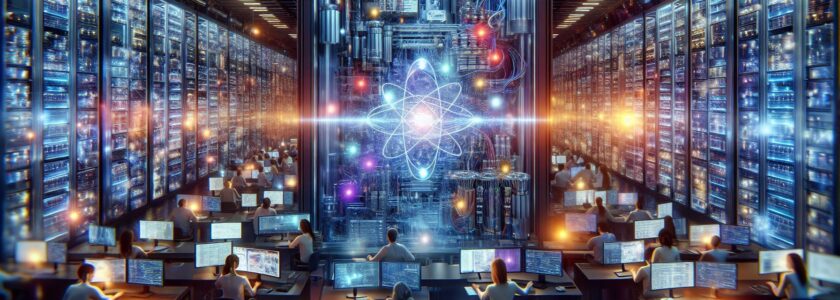
Alright, I know it’s not the sexiest term, but quantum computing might be the secret sauce that takes AI to mind-boggling heights. Imagine a computer solving complex problems that would take us years, if not centuries, with a traditional supercomputer, all in the time it takes you to blink. Quantum computing is to AI what rocket fuel is to space exploration. With companies like Google and IBM making strides, the dream is getting closer to reality every day. They claim that the computational barriers we’ve been facing could just dissolve. Okay, maybe not literally, but you get the point.

Neural Networks: From Infancy to Savant-hood

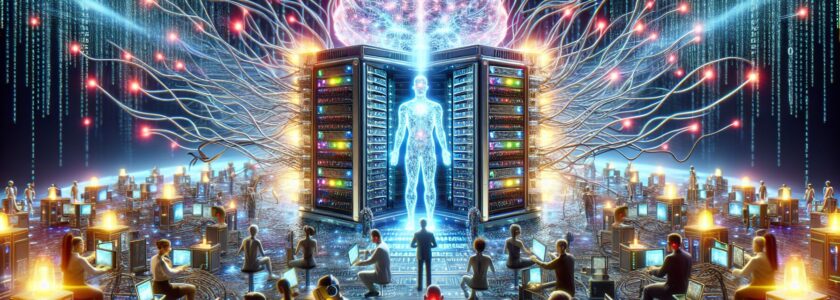
Imagine the brain of an AI as a growing child. Except this child is on a growth hormone made of pure innovation. Neural networks, the backbone of AI learning and decision-making, are growing faster than ever. We’re seeing the dawn of systems that can identify trends, predict outcomes, and offer personalized experiences with an uncanny level of precision. Just a few years ago, asking a machine to compose symphonies or write poetry would’ve gotten you some funny looks. Now? It’s practically another Tuesday at OpenAI.

Potential Implications: A Double-Edged Sword

Now, let’s take a moment to acknowledge the elephant in the room, or perhaps in the machine. The implications of this advanced AI era are both mesmerizing and complex.

The Positives: Your Digital Sidekick

I like to think of AI’s potential as having your very own digital sidekick, tirelessly optimizing your day-to-day life. In healthcare, AI’s incredible diagnostic capabilities could save countless lives. In transportation, autonomous vehicles promise convenience and a significant reduction in accidents. And let’s not forget the creative arts. AI can generate designs, compose music, and even contribute to storytelling. I’m a bit of a writer myself, and it’s fascinating to collaborate with AI in the creative process.

The Challenges: Ethical Concerns

But wait, before we get too starry-eyed, let’s remember that with great computing power comes great responsibility. The ethical concerns surrounding AI are vast and varied. From data privacy issues to the bias built into algorithms, there’s plenty to worry about. And let’s not gloss over the job displacement fears, the ultimate AI predicament. Sure, machines might take over some tasks, but I think we’ll invent completely new jobs that we can’t even imagine yet. After all, who knew “social media manager” would be a thing back in the ’90s?

Security Risks: The Ultimate Bug (or Feature?)

There’s an age-old saying, “To err is human.” But what about machines? The truth is, even the most advanced AI systems aren’t immune to bugs or hacks, which could, in theory, lead to catastrophic outcomes. Making sure AI security is solid will be critical as we integrate these systems more deeply into society. As the saying goes, an intelligent machine is only as good as its programming.

Gazing Into the Crystal Ball: Future Possibilities

Speculating about AI’s future is a bit like predicting next season’s fashion trends. Fabulously uncertain but dreadfully exciting.

The Singularity: A Speculative Odyssey

Ah, the singularity. It’s that elusive point where AI surpasses human intelligence, a concept that fascinates and frightens futurists and techies alike. Whether or not it’ll happen in our lifetime is anyone’s guess, but it’s a tantalizing thought. Imagine a world where machines not only possess but further develop capabilities beyond our wildest dreams. It’s like living alongside a digital superbeing, though hopefully not like your favorite sci-fi villain. Or, at least, we hope so.

AI and Everyday Life: Your Utopian World

Now think about your daily grind, completely reshaped by intelligent machines. Expect AI-driven personal health consultants, farming droids ensuring food sustainability, and maybe even AI chefs preparing gourmet meals tailored to your nutritional needs. The dream isn’t just about doing things faster, but doing them smarter, making room for a more balanced and fulfilled lifestyle for us humans. Who knows, more time to binge old seasons of your favorite shows without guilt!

Conclusion: Embracing Change with Open Circuit Boards

So, here we are, standing at the threshold of what feels like an inevitable future, defined heavily by hyper-intelligent AI. It’s a ride that promises wonder but asks for profound consideration and adaptation. As we leap forward, let’s do so with a spirit of curiosity, tempered with caution, and perhaps a touch of humor. After all, the future’s always a bit easier to handle when we can’t take ourselves too seriously, right?

Thanks for joining me today! Keep dreaming big and questioning deeper. Just maybe let an AI lend a hand. Keep those lines of code clean, and until next time, amigos. 🎉

Quantum Computing: The Next Tech Frontier

Quantum Computing: The Next Tech Frontier

Hey tech enthusiasts! Grab your virtual reality headsets and settle in for a wild ride into the world of quantum computing. If you thought the quantum realm was only for Marvel’s Ant-Man, think again. We’re on the brink of a digital revolution that makes even the most advanced supercomputers feel like abacuses. Let’s dive into what makes quantum computing the next big thing, why you should care, and what sort of quantum shenanigans we can expect in the future.

Quantum What Now?

First off, let me break it down: Quantum computing isn’t just about hanging out with Schrödinger’s cat in a superposition. At its core, it uses the principles of quantum mechanics to process information in ways that classical computers simply can’t. While classical computers use bits (think zeros and ones), quantum computers use qubits, which can exist in multiple states at once, thanks to superposition. This ability opens the doors to mind-blowing computational speeds and processing power.

I know, it sounds like something out of a sci-fi novel, but trust me—quantum computers are very real and getting more practical by the day.

Breaking Down the Breakthroughs

From Fringes to Frontlines

Quantum computing was once the domain of theorists and physicists who occasionally wore wizard hats while scribbling on blackboards. But times are changing. Companies like Google, IBM, and startups you’ve probably never heard of are making real progress. Google’s announcement of “quantum supremacy” in 2019 was a loud and proud statement that the race was heating up. It’s not just them, though. Did you hear about IBM’s legal-sized quantum computers? They’ve gone from lab weirdos to legitimate tech celebrities.

Real-World Applications

OK, enough tech jargon—what does this mean for us normal folks living outside the circuits? Well, quantum computing could revolutionize a bunch of different fields. For example, imagine a world where drug development doesn’t take a decade but happens at a dizzying pace thanks to simulations that are faster than George R. R. Martin’s typing speed.

Or consider traffic optimization, where city symphonies of honking horns become orchestrated streams of efficient flow, all thanks to quantum magic. I’ll bet Elon Musk would love quantum assistance for faster Mars missions too!

Current Challenges: It Ain’t Easy Being Quantum

Cryogenics, Qubits, and Other Headaches

Before you plan your quantum-powered utopia, let me keep it real: quantum computing has some serious hurdles. Qubits are fragile beauties; they need to be kept at temperatures colder than Siberian winters (think fractions of a degree above absolute zero). Maintaining coherence (fancy talk for keeping qubits stable) is a massive challenge that requires some serious ingenuity and not to mention cash.

Plus, if you think debugging traditional code is hard, you’d better buckle in for quantum errors. They’re an entirely different beast.

Peering into the Quantum Future

What Could Be?

Fasten your seatbelts, hypothetical warriors, because we’re diving into speculative waters. Future possibilities are exciting as heck. Cryptography as we know it could be turned on its head. Quantum computers might crack today’s encryption like a kid smashing a piñata. So stay tuned for new ways of securing our data.

Quantum AI? Yeah, it’s exactly as mind-blowing as it sounds. Imagine AI algorithms running like Usain Bolt but researching and solving problems faster than ever before. Scared or excited? Well, a bit of both is an appropriate reaction.

Everyone’s Invited (Eventually)

In the spirit of techno-utopian dreams, I like to think that someday quantum computing will become accessible to regular people, even to my grandma and her unruly cat. Just as personal computers took about 40 years to migrate from intimidating laboratories to our coffee-stained desks, quantum computers might eventually sit in our future workspace with cute quantum keyboards and all. Who knows, maybe you’ll have a quantum AI assistant helping assemble IKEA furniture in real time (because let’s face it, quantum computing should at least solve that chaos).

Conclusion: Just the Beginning

Whether you’re knee-deep in qubit design or just observing from the cosmic sidelines, quantum computing is a paradigm shift that could redefine everything we know about technology, science, and, quite possibly, life as we know it.

I hope this whirlwind tour excited your synapses and tickled your curiosity. We’ve got some wild quantum days ahead, and while the future isn’t certain, one thing is for sure: We’re living in truly fascinating times. Who needed flying cars when quantum circuits are flying us into the next dimension of possibilities? Stay curious, my friends. Our future is unwritten, and you just might be the next trailblazer in this grand quantum adventure.

And that, dear readers, was your daily dose of tech optimism. Now, get back to your regularly scheduled coding or browsing. The quantum age is coming whether we’re ready or not!

Riding the Quantum Wave: The Future of Computing

Riding the Quantum Wave: The Future of Computing

Hey fellow tech enthusiasts! Today, let’s dive into something that’s been tickling my cerebellum recently. I’m talking about quantum computing, one of tech’s most dazzling frontiers. Now, I can’t promise we’ll all be quantum physicists by the end of this post, but I might just leave you with a renewed sense of awe for where this technology could take us.

A Quantum Leap Forward

Okay, let’s start with a question: What the heck is quantum computing, anyway? In simple terms, it’s a mind-bending flex at the intersection of technology and the laws of the universe. Unlike classical computers that use bits as the smallest unit of information, quantum computers harness the power of quantum bits or qubits. These bad boys can exist in multiple states at once (thanks, quantum superposition!), allowing them to process tons of possibilities simultaneously.

Not impressed yet? Well, consider this: Imagine you have a massive library, and you’re hunting for a specific book. A classical computer, like an earnest librarian, would search book by book. Meanwhile, a quantum computer could pull a Doctor Strange and flip through all volumes at once. Yep, quantum computing promises a world where the impossible starts to look mundane.

Why Should We Care?

Alright, so quantum computing is cool and all, but why should we care? Great question! This emerging technology is ready to disrupt industries and solve problems that are currently unsolvable. Everything from cryptography, drug discovery, climate modeling, and even Artificial Intelligence could get a major boost.

Let’s talk cryptography for a moment. Today’s encryption relies heavily on the complexity of math problems that classical computers find almost impossible to crack. Enter quantum computing, which can solve these problems exponentially faster. You get where I’m going with this, it’s both a boon and a threat to our existing security systems.

Google and other tech giants are investing heavily in developing quantum algorithms for drug discovery. With quantum computing, the process of simulating molecular interactions speeds up dramatically, opening up possibilities for breakthroughs in medicine we’ve only dreamt of so far.

The Roadblocks on the Quantum Highway

Hold your horses, though. It’s not all rosy. We’re not exactly at the “everyone gets a quantum computer” stage yet. Quantum computing still faces significant obstacles. For one, qubits are notoriously finicky. They need ultra-cold environments, and interference from the external world can easily spoil their delicate states.

There’s also the challenge of error rates. While the potential for speed and efficiency is immense, quantum computations are prone to errors. Developing error-correcting algorithms is a bit like playing whack-a-mole, and it’ll take a lot more time and brainpower to make quantum computing reliably practical.

And, of course, there’s the question of accessibility. The sheer complexity and fragility of quantum systems mean they’re not the cheapest or easiest tech to deploy. It’s like trying to sell helicopters in the era when cars are still the norm.

What’s Coming Next

So, what’s next? Let’s engage in a bit of speculation. In the quest for technological supremacy, companies like IBM and Google are racing toward quantum supremacy, a point where quantum computers can effortlessly outperform classical counterparts for certain tasks.

Within the next decade, we might witness early-adopter industries incorporating quantum systems to tackle specific challenges. Solving complex optimization problems, revolutionizing AI algorithms, and enhancing data analysis processes, all within reach.

Imagine the breakthroughs in personalized medicine as AI-assisted quantum computations work through genetic data faster and with more accuracy. Picture financial systems recalibrating for optimized high-frequency trading models. The potential is as expansive as it is exciting.

Final Thoughts: Bridging Reality and Imagination

To wrap it up: Yes, quantum computing seems to exist in a dimension where sci-fi flirts with reality. It offers exhilarating promises and, like any new adventure, its share of challenges. But, speaking as a tech enthusiast, I’m genuinely excited about what’s coming. We’re on the cusp of technological wonders that we’re just starting to comprehend, it’s like standing on the shoulders of science legends while staring at the cosmos.

Sure, we’re not quite at the angels-in-white-robes level of quantum computing competency, but we’re getting there. And one thing’s clear, there’s no turning back. So let’s keep our eyes peeled and excitement levels high because, who knows? The next quantum breakthrough might just be a qubit away.

Stay curious and geek on, my friends!

The Alchemy of Artificial Intelligence: Unlocking the Secrets of the Creative Arts

The Alchemy of Artificial Intelligence: Unlocking the Secrets of the Creative Arts

Hey tech enthusiasts! Today, I’m diving into an area of tech that’s got me completely hooked: AI in the creative arts. Picture this: robots writing symphonies, algorithms painting masterpieces, and neural networks penning poetry that actually moves you. Sounds like science fiction? I thought so too, but it’s happening right now. Let me show you how AI is changing the arts, one pixel (or note, or word) at a time.

The Machines Have Ears

Remember when computers could only make those annoying beep sounds? Those days are long gone. Today’s AIs are jumping into music creation like they’ve been doing it their whole lives. Companies like Amper Music and Jukedeck have built AI composers that can create royalty-free tracks instantly. Want a happy, samba-infused techno track? Done. Need a sad piano ballad? Just ask. These AI platforms have analyzed thousands of songs to spot patterns that most of us only feel subconsciously. They’ve basically taught themselves to hear music the way we do, which honestly blows my mind.

And we’re not just talking about basic background music. Remember when IBM’s Watson teamed up with Grammy-winning producer Alex Da Kid to write a song? Watson studied years of Billboard hits, historical speeches, and social media posts to come up with themes for an entire EP. That’s one seriously well-educated AI!

Brushstrokes by Bytes

Visual arts used to be the ultimate human domain. Paint, canvas, artistic vision. But AI has crashed this party too. Platforms like DeepArt.io can turn your photos into artworks that look like Van Gogh or Picasso painted them. Ever wondered what your selfie would look like as a surrealist masterpiece? Now you know. Google’s DeepDream project started a whole new genre of trippy, dream-like art created by neural networks seeing things we never could.

Last year, an AI-assisted artwork called “Edmond de Belamy” sold for over $400,000 at auction. The algorithm (called a Generative Adversarial Network, or GAN) learned to paint by studying 15,000 portraits spanning six centuries. Some people see this as AI taking over human creativity. I think it raises fascinating questions about who really owns creative work when machines are involved.

Elementary, My Dear Neural Network

Text generation is where things get really wild. OpenAI’s GPT models are incredible writers. Despite the technical name, GPT can draft articles, write poetry, and even run tabletop RPG games. Sometimes I wonder if it’s secretly taking creative writing classes on the side.

We’re seeing AI write movie scripts too. The short film “Sunspring” was written entirely by an AI called Benjamin. The plot made absolutely no sense, but somehow that made it both frustrating and charming. It needed human editing, sure, but it hints at a future where AI might actually compete with creative writing workshops. Maybe after a few more updates and some coffee breaks.

Have We Reached the AI Renaissance?

With all these advances, you’re probably wondering what happens to human artists and writers. Here’s what I think: AI isn’t replacing human creativity. It’s adding new layers to it. We’re seeing a kind of tech-Renaissance where humans and machines work together to create things neither could make alone.

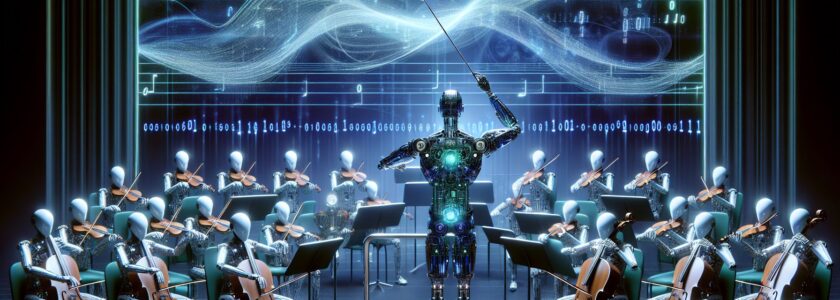
AI in art is like a new instrument. It doesn’t play itself, and it doesn’t make musicians obsolete. It’s just another tool, one that can amplify human creativity in ways we’re only starting to explore. A Beethoven symphony or Da Vinci painting carries so much human emotion and historical context that I doubt any algorithm will fully capture those depths anytime soon.

Where Do We Go From Here?

AI keeps evolving at crazy speed, so expect more surprises. We might see AI museum curators, algorithm-driven live performances, or machines that create immersive interactive art experiences. This is the next frontier, not just for technology, but for how we think about creativity itself.

As someone who’s obsessed with this blend of art and artificial intelligence, I can tell you the road ahead is both challenging and exciting. So grab some popcorn and buckle up. We’re about to witness something incredible: the meeting of human imagination and machine intelligence. Here’s to the strange alchemy of AI and creativity. Cheers! 🍻

The Symphony of Innovation: AI in the Creative Arts

The Symphony of Innovation: AI in the Creative Arts

Hey tech enthusiasts! Gather ’round because today’s blog post is all about a fascinating crossroads between the high-tech and the heart-touching—the wild fusion of Artificial Intelligence and the world of creative arts. If you’ve ever wondered what happens when silicon meets sentiment, you’re in for a treat. We’ll explore the latest trends in AI artistry, tackle some mind-bending questions about creativity, and look toward what the future might hold for this unusual partnership. So, let’s jump right in, shall we?

From Sci-fi Dreams to Studio Reality

I remember when sci-fi used to be the only place you’d find artificial intelligence belting out a tune or whipping up a masterpiece. Fast forward to today, and it’s not just a wacky idea slapped onto the back of a VHS tape. We’re living in an era where AI can actually generate music, art, and even write literature. It’s as if HAL 9000 decided to stop being kind of a jerk and start unleashing his inner Mozart.

But how did we get here? Well, AI in the creative arts has been evolving steadily over the past few years, thanks to companies like OpenAI and tools such as GPT-3 and DALL-E. These digital maestros take an enormous set of data—think of countless songs, paintings, or novels—and use it to generate entirely new pieces that are absolutely fresh yet eerily familiar. It’s like being serenaded by a robot who’s read your entire Spotify playlist and knows exactly what you like.

AI Companions: Art’s Newest Collaborators

Let’s talk about collaboration—one of the cornerstones of creativity. Traditionally, artists have bounced ideas off each other, or sometimes their cats (seriously, some of history’s greatest works owe a big thank you to a furry muse). Now, add AI to that list of collaborators.

Imagine you’re an aspiring musician, toiling away on your latest track. You’re stuck on a riff that seems as elusive as a decent Wi-Fi connection in the middle of a Zoom call. Enter AI. Tools like Amper Music and AIVA offer musicians virtual jam sessions where AI composes sounds and sequences, providing the spark needed to light that creative fire. It’s like having a musical buddy who doesn’t mind working at 3 AM.

Writers aren’t left out of the party either. With AI-assisted tools, they can generate storylines, resolve plot holes, and even help with character development. That’s right—instead of staring at a blinking cursor for hours, you could have a robot dish out some inspiration like it’s Oprah handing out car keys.

Show Me the Monet: AI-Generated Visual Art

If music and wordsmithing weren’t enough, let’s dive into the visual arts. AI in visual art is straight up mesmerizing, like a Monet that suddenly decided it wanted to also be a Picasso, and maybe even pull a prank or two inspired by Banksy. We’re talking about AI capable of anything from generating trippy abstract paintings to creating realistic human portraits.

One of the coolest things I’ve seen lately is AI-generated art being auctioned at major galleries. Christie’s even sold an AI-produced piece called “Portrait of Edmond de Belamy” for a cool $432,500. Not bad for something birthed from lines of code, right?

These AI creations prompt serious questions about creativity and authorship. Who really owns the art? This question is triggering lively debates even the most sophisticated algorithms can’t yet untangle. Artists have started using AI tools like DeepArt and ArtBreeder to create unique, memorable pieces of art, each with a touch of human-AI collaboration.

The Ethical Kaleidoscope: Questions and Challenges

While the AI-driven creative boom is undeniably exciting, it doesn’t come without its share of challenges and ethical conundrums. Who should be credited for AI-generated art? What happens to copyrights when the line between human and AI creation blurs? And let’s not forget about job security—what does AI mean for aspiring artists?

It’s a slippery slope, my friends. The path of integrating AI into the arts is fraught with questions about originality, ownership, and the value we place on human-made versus AI-made art. Imagine an AI stealing the show at the Grammys or the Oscars. Are we ready for that?

Then there’s the risk of homogenization. If everyone uses similar AI models to generate art, could we end up in a creative monoculture where all artistic expression blends together in a dull uniformity? It’s a puzzle that will undoubtedly require artists, technologists, and ethics scholars to solve, preferably over some really strong coffee.

Peeking into the Crystal Ball: What’s Next?

Predicting the future of AI in the creative arts is as tricky as forecasting the stock market (or playing chess against a grandmaster, for that matter). But it’s clear that this is just the beginning. You can expect AI tools to become more sophisticated and more accessible, allowing even the most technologically-challenged of us to create something magical.

I wouldn’t be surprised if AI starts getting involved in bringing immersive experiences to life. Imagine interacting with an environment that changes the soundtrack and visual art based on your mood, captured by biofeedback sensors. We could very well be on the verge of experiencing art in ways we never thought possible.

Artists will continue to refine their relationships with AI companions, blurring the lines between who—or what—is driving the creative bus. The journey will be full of innovation, surprise, and yes, a fair share of bumps along the way.

Wrapping it Up

In the grand symphony of human ingenuity, AI in the creative arts is a new instrument being added to the orchestra, mixing tech-savvy precision with the messy, beautiful chaos of human creativity. From studio playlists to gallery walls, and science fiction to everyday reality, AI isn’t just a tool—it’s a new kind of artist, one eager to work alongside us.

As we embrace this brave new world, let’s continue to ask questions, push boundaries, and celebrate the surprises that emerge from this exceptional collaboration. And who knows? Maybe someday, artificial and human artists will sit side-by-side at an awards ceremony, each raising a glass to the other’s contributions in a toast to creativity’s wild possibilities.

So here’s to AI, our newest creative partner, and to a future where art knows no bounds. Let’s make it extraordinary.