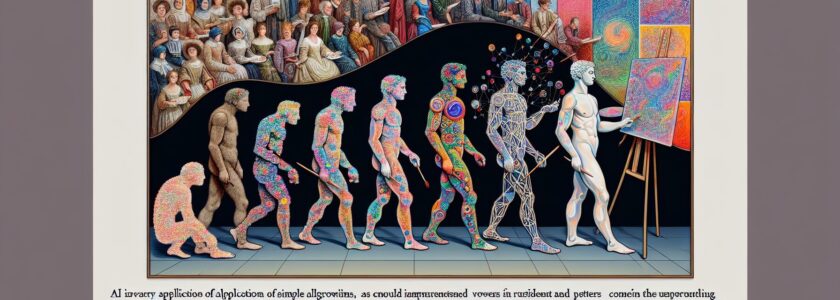
The Epic Evolution of AI in Creative Arts: From Algorithms to Masterpieces

The Epic Evolution of AI in Creative Arts: From Algorithms to Masterpieces

Hey there tech explorers! So, I’ve been diving headfirst into the world of emerging technologies and I can’t help but feel like a kid in a candy store every single day. Today, I’ve got something that’s not just intriguing but straight-up mind-bending for all you creative souls out there. We’re talking about Artificial Intelligence pretty much making its way into every creative nook and cranny. Yep, AI in creative arts is no longer a sci-fi trope. It’s happening, and it’s wilder than you think!

When Algorithms Meet Artistry

Let’s roll back a bit to get a sense of how we got here. Remember when AI was just a bunch of geeky algorithms that helped us sort our photos or spam emails? Well, those days are long gone. AI is now donning a beret and getting its hands paint-splattered in the art studio. Technologies like Generative Adversarial Networks (GANs) have turned AI from being mere digital assistants to full-blown creators. These are the same technologies behind mind-boggling projects like DeepArt and DALL-E.

When OpenAI launched DALL-E, an AI model that creates images from textual descriptions, the internet went into a frenzy. I mean, who wouldn’t get excited about typing in “a fantasy castle made of chocolate” and getting a drool-worthy image of exactly that? AI is pushing past boundaries we didn’t even think existed!

The New Age of Creative Collaboration

One of the coolest things about AI in creative arts is how it’s changing collaboration. Think of it as having a world-class assistant with infinite patience that’s always ready to brainstorm with you. Artists are using AI to expand their unique visions, working alongside these digital brains to bring something to life that neither humans nor machines could achieve alone.

Some creative maestros are even developing “adaptive” art—works that learn and evolve based on the audience’s reactions. Think back to sitting through an art exhibit and wishing one of those silent, solemn paintings would just turn around and say, “Hey, what do you think of this?” Welcome to the future!

Human Element vs. Machine Precision

Now, I can already hear some of you raising an eyebrow and asking, “But doesn’t this take out the human element from art?” Well, here’s where it gets extra thrilling. AI isn’t here to steal the artist’s paintbrush. It’s here to redefine the canvas.

It’s kind of like when Bob Ross taught us that even the happiest of accidents can lead to masterpieces. AI is adding a layer of complexity and depth that often eludes even the best human creators. Personally, I’ve seen AI generate patterns and color schemes in seconds that would take even seasoned designers ages to develop. Yet, it’s the artists who set the tone and call the shots, creating an innovative dance between man and machine.

Challenges? Absolutely!

Of course, let’s not pretend the sky is all rainbows and unicorns. Critics and skeptics argue about issues ranging from IP rights to ethical dilemmas. There’s that ever-present fear of mass-replicated, soulless art taking over. And the concept of “authorship” becomes a real head-scratcher—whose name gets inked on a piece, the algorithm or the artist? This territory is as exciting as it is tricky.

We’re also navigating an entirely new realm of digital forgeries and deepfakes. If a picture is worth a thousand words, an AI-generated video can swap entire dictionaries!

Gazing Into the AI-Powered Crystal Ball

So, where does all this lead us? Honestly, the potential is limitless. We’re already seeing AI model-driven music albums, scriptwriting software developing movie plots, and even computational designers orchestrating entire virtual worlds. The future might see AI becoming as essential to artists and creators as Photoshop or AutoCAD is today. Imagine an AI co-writer for your band, spitting out guitar riffs that are perfect fits every single time.

On the speculative side (call me a dreamer!), we might have AI-driven tech that integrates into VR environments, allowing artists to craft entire immersive experiences as they’re conceptualized, right from their mind to digital space.

Closing Thoughts

With every algorithm and data set, AI in creative arts is proving that the fourth wall of innovation is just a suggestion, not a barrier. In this emerging era, art isn’t just an echo of the human spirit. Now it marries with technology to become something new, something transcendent. How cool is it that we get to witness this fusion unfold in real time?

So, here’s a virtual toast to the imaginative alliance of silicon and soul, the dreamers and coders, and to AI’s artistic leap into the unknown. Let’s keep our eyes peeled, our minds open, and our canvases sprawling. It’s going to be a masterpiece unlike any other!
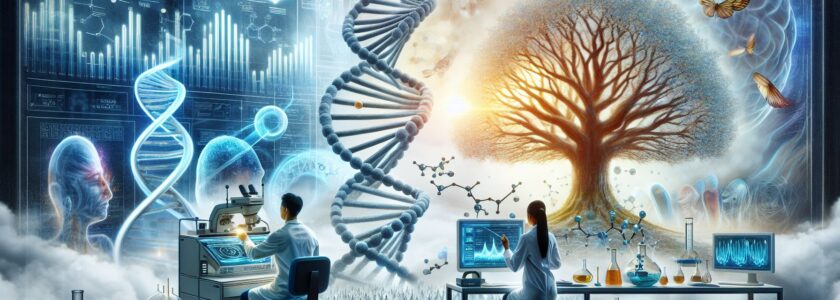
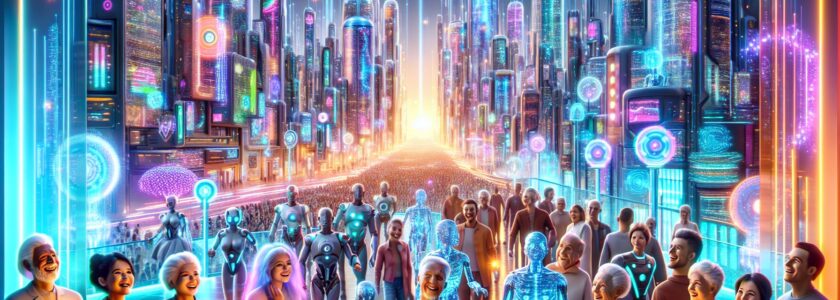
The Quest for Immortality: Exploring Breakthroughs in Longevity Science

The Quest for Immortality: Exploring Breakthroughs in Longevity Science

Introduction: A New Age of Longevity

Welcome to the future of longevity science, where living well beyond our typical lifespan isn’t just science fiction anymore. Every day brings new developments that could genuinely extend human life, and we might actually see a world where hitting 100 becomes pretty normal instead of remarkable. We’re watching health science, biotech, and genetics all come together in what feels like humanity’s oldest dream: beating death, or at least aging gracefully for a lot longer.

Today I want to dig into what longevity science is actually promising us. We’re talking CRISPR gene editing, anti-aging drugs, and a whole bunch of other discoveries that have both tech people and health enthusiasts pretty excited. Let’s look at how these technologies might actually double our lifespans and fight aging with tools that honestly do sound like they’re straight out of a sci-fi movie.

The Genetics of Longevity: Editing the Blueprint of Life

CRISPR and Genetic Modification: A New Frontier

CRISPR-Cas9 is probably the most exciting thing happening in longevity research right now. This gene-editing tool has made genetic changes way more accessible and precise than anyone thought possible just a few years ago. The idea that we could target and change specific parts of human DNA is pretty mind-blowing. But here’s the kicker: we’re not just talking about fixing diseases anymore. We might be able to actually slow down or reverse aging itself.

Scientists are studying genes like FOXO3 and SIRT1 that seem connected to how long people live and how healthy they stay. Researchers are working to figure out whether tweaking these genes with CRISPR could boost how well our cells repair themselves, prevent age-related diseases, and give us longer, healthier lives.

Epigenetics: Turning Genes On and Off

Gene editing isn’t the whole story though. Epigenetics adds another fascinating layer to longevity research. This field looks at how our lifestyle choices like diet, exercise, and environment can turn genes on or off without actually changing our DNA. There’s this concept called the “epigenetic clock” that suggests we might slow aging by controlling these external factors.

Companies are seriously investing in this stuff. Calico, which is owned by Google’s parent company Alphabet, and biotech company Gero are both working hard on treatments that could reset or slow down this epigenetic aging process.

Feeding Longevity: Biohacking Your Way to a Longer Life

The Ketogenic Mindset: More Than Just a Diet

Silicon Valley biohackers and longevity fans have really latched onto the ketogenic diet. It’s low-carb, high in healthy fats, and supposedly does more than just help you lose weight. The theory is that ketones, which your body makes when it burns fat for energy, improve how your mitochondria work, boost brain function, and trigger anti-aging processes.

Fasting is getting similar attention. Whether it’s intermittent fasting or just eating during certain hours, research in animals shows it might help you live longer. Human studies are still catching up, but the idea is that fasting tricks your genes into repair mode, similar to what happens during actual calorie restriction.

Supplements: The Pillars of Anti-Aging?

You’ve probably heard about supplements like resveratrol, NAD+ boosters (NMN and NR), and spermidine becoming really popular lately. People are claiming these compounds can fight aging at the cellular level, helping with DNA repair and keeping your genes stable.

Honestly, we won’t know for sure how well these work until we have long-term studies that follow people for decades. But their popularity shows how people are shifting toward trying to prevent aging instead of just treating it after the fact. These supplements represent this almost utopian hope that we can outsmart aging.

Robotics and AI: Your Future Health Guides

Automated Health and Wearable Tech

With chronic diseases becoming more common, AI health assistants and robotic diagnostics are changing how we think about personalized medicine. Add in all the wearable tech like smartwatches, fitness trackers, and even smart clothing, and we’re getting a completely new approach to monitoring health and making informed choices about our lives.

These devices do way more than count steps and track heart rate now. They use AI to give you actual insights about blood oxygen, sleep quality, stress levels, and provide real-time feedback about how your lifestyle changes might affect how long you live.

AI in Drug Development: The Faster Path to Anti-Aging Solutions

AI and machine learning are cutting through the usual bureaucratic mess and long timelines in drug development. By running simulations of billions of molecular interactions, AI can speed up finding new compounds that might fight aging. Companies like Insilico Medicine and DeepMind’s AlphaFold are using AI to map proteins and predict their structures, which directly impacts fields like pharmacogenomics.

Conclusion: A Brave New World of Longevity

As we get closer to potentially redefining human lifespan, longevity technology reflects this deep human desire for more meaningful years. The path to much longer lives comes with both incredible scientific potential and some serious ethical questions. How these advances work with global equity, ethical standards, and legal frameworks will really shape what happens next.

We’re living through this intersection of hope and reality right now. Major breakthroughs in genomics, nutrition science, AI, and bioengineering suggest we might not just delay aging, but actually give people much longer periods of good health. This challenges the basic assumption that death is inevitable. Like any big technological promise though, we need to be careful, responsible, and balanced as we navigate these exciting but uncharted waters.

Thanks for exploring longevity science with me today. I’d love to hear your thoughts and any futuristic ideas you have in the comments. Remember: today we dream, tomorrow we might actually make it happen!

Longevity and the Quest for Eternal Youth: A Tech Utopian Dream Realized?

Longevity and the Quest for Eternal Youth: A Tech Utopian Dream Realized?

In the weird world of emerging tech, few topics get people as fired up as the promise of living way longer. What used to be pure science fiction is actually starting to happen in real labs with real money behind it. Scientists are making some serious progress, and big-name investors are throwing cash at the problem. So are we actually close to beating aging? Let’s dig into what’s really happening with longevity technology and see if any of these wild claims hold water.

The Dawn of Longevity Tech

For most of human history, getting old and dying was just what happened. Period. But now we’ve got scientists seriously trying to hack our biology. Longevity tech covers everything from fancy bioengineering to new drugs that promise to keep us kicking way longer than nature intended. And I’m not talking about squeezing out a few extra years in a nursing home. These researchers want to add decades of healthy life.

Unlocking the Mysteries of Aging

The first step is figuring out why our bodies fall apart in the first place. Scientists have identified the main culprits: our chromosomes get shorter over time, cells start acting like stubborn teenagers and refuse to die when they should, and our DNA gets messy. Understanding these problems gives researchers clear targets to attack.

The most exciting development right now is probably senolytics. These drugs hunt down and kill old, broken cells that stick around causing trouble. Think of them as molecular bouncers kicking out the troublemakers. Animal studies show that clearing out these cellular deadbeats can seriously extend both lifespan and healthspan. The difference matters because nobody wants to live to 150 if the last 50 years are miserable. Early results suggest we might get both more years and better years.

Genomics and the Fountain of Youth

Gene editing tools like CRISPR have moved from science fiction to actual labs faster than anyone expected. Researchers can now target specific genes linked to aging and potentially rewrite our genetic destiny. The idea of editing our DNA to live longer sounds insane, but it’s happening.

George Church, one of the biggest names in genetics, is already working on reversing aging at the cellular level. His work isn’t just theoretical anymore. We’re talking about actual experiments that could fundamentally change what it means to grow old. The implications are staggering when you really think about it.

Nutraceuticals and Pharmacological Interventions

Some of the most promising longevity research involves drugs we already use for other things. Metformin, a common diabetes medication, might also slow aging. Clinical trials are testing whether this cheap, widely available drug can delay age-related decline. It’s wild to think that your anti-aging regimen might someday include a pill that costs pennies.

Then there are newer interventions like NAD+ boosters, which try to juice up cellular energy production. These supplements claim to delay aging and boost energy, though the evidence is still mixed. The whole field feels like a blend of rigorous science and biohacking enthusiasm.

The Ethics and Implications of Longevity

Here’s where things get complicated. Dramatically extending human life sounds great until you start thinking through the consequences. We’re potentially opening a can of worms that makes current social problems look simple.

The Quest for Accessibility

What happens when only rich people can afford to live forever? We already have massive inequality in healthcare access. Imagine that gap when the wealthy can buy centuries of extra life. This isn’t just unfair, it could create a permanent class divide between mortals and the functionally immortal. That’s a dystopian nightmare if I’ve ever heard one.

Overpopulation and Resource Strain

Our planet is already struggling to support 8 billion people. What happens when those people start living for 200+ years? More people need more food, water, energy, and space. The environmental impact could be catastrophic unless we figure out sustainability first. It’s a classic case of solving one problem while creating ten others.

Philosophical Questions

Does death give life meaning? Would we get bored after 150 years? What happens to retirement when people work for centuries? These aren’t just abstract philosophical puzzles. They’re practical problems societies will need to solve. The social structures we’ve built around normal lifespans would completely break down.

Navigating the Future of Longevity Technology

Despite the challenges, longevity research is moving fast. The question isn’t whether these technologies will work, but how quickly and who will benefit from them.

Pioneers Leading the Charge

Silicon Valley money is flooding into longevity research. Google’s Calico Labs and Jeff Bezos-backed Altos Labs are just the beginning. When tech billionaires start throwing serious cash at a problem, things tend to move quickly. These aren’t just vanity projects either. The investors see real commercial potential.

The combination of scientific progress and financial backing creates momentum that’s hard to stop. These companies aren’t just trying to add years to life. They want to add quality years, which is much harder but also much more valuable.

Building a Better Future

The path forward requires more than just good science. We need thoughtful policies around access, environmental impact, and social consequences. The technology will probably work eventually. The bigger question is whether we can deploy it responsibly.

This isn’t just a scientific challenge anymore. It’s a social and political one. Getting longevity tech right means thinking through all the downstream effects and planning accordingly. That’s a lot harder than the science itself.

Conclusion

Longevity technology is moving from science fiction to reality faster than most people realize. Gene editing, cellular repair, and anti-aging drugs are all showing real promise in labs and early trials. But the science is only half the battle.

The real test will be whether we can handle the social, economic, and environmental consequences of people living much longer. Done right, longevity tech could be humanity’s greatest achievement. Done wrong, it could create new forms of inequality and environmental disaster. Either way, we’re probably going to find out sooner than we think.

A New Dawn in Tech: Harnessing Artificial Intelligence for a Utopian Tomorrow

A New Dawn in Tech: Harnessing Artificial Intelligence for a Utopian Tomorrow

We’re living through a weird time when every week brings news about some tech breakthrough that’s supposed to change everything. Among all the hype, AI genuinely feels different – it might actually deliver on those big promises. I wanted to dig into how machine learning and other AI trends could push us toward something resembling a tech utopia. Coffee in hand, let’s look at how these futuristic dreams are starting to show up in the real world.

Understanding Artificial Intelligence: More Than Just Algorithms

AI has moved way past the science fiction phase. It’s not just about crunching numbers anymore. We’re seeing AI drive cars, help doctors spot diseases, and create art that’s honestly pretty impressive. It’s everywhere, and it’s getting smarter fast.

Machine learning is the engine behind most of what makes AI interesting. Instead of programming every possible scenario, we let computers learn from massive amounts of data. The result? AI systems that adapt, improve, and sometimes surprise us with how well they work. What used to be theoretical research is now powering apps on your phone.

Machine Learning’s Role in the AI Revolution

Machine learning is what makes AI actually useful. These systems analyze huge datasets to spot patterns and make predictions. That’s how Netflix knows what you want to watch next and how your bank catches fraudulent transactions before you even notice them. AI is quietly working behind the scenes in ways most people don’t even realize.

Take Generative Adversarial Networks (GANs) – two AI systems basically competing against each other to create better results. This setup can generate photos so realistic they’re hard to distinguish from real ones, or compose music that sounds genuinely creative. GANs show us that AI isn’t just about efficiency. It’s starting to push into territory we thought was uniquely human.

How AI is Building Utopian Societies

Sure, AI gets plenty of dystopian press, but the positive potential is real. We’re seeing AI tackle healthcare, transportation, and climate change in ways that could genuinely make life better for everyone. The question isn’t whether it’s possible – it’s how fast we can make it happen.

Pioneering AI in Healthcare

Healthcare is where AI feels most promising right now. Machine learning can analyze your genetic data, medical history, and symptoms to suggest treatments tailored specifically for you. Robotic surgeries are getting more precise. Diagnostic tools can spot diseases earlier than human doctors.

Picture this: AI systems connected to wearable devices and health sensors could predict disease outbreaks before they spread. Early detection becomes routine instead of lucky. The technology exists – we just need to scale it up and make it accessible. A world where preventive care actually prevents problems isn’t science fiction anymore.

Transportation Transformed by AI

Self-driving cars get most of the attention, but AI is reshaping transportation in quieter ways too. These systems promise fewer crashes, less traffic, and lower emissions. Public transit could become more reliable and efficient with AI managing routes and schedules in real time.

Behind the scenes, AI optimizes shipping routes, predicts when vehicles need maintenance, and manages supply chains. Companies are already saving money and reducing waste. When this scales up, we could see transportation that’s both cheaper and better for the environment.

Tackling Climate Change with Smarter AI

Climate change is the big test for whether AI can really help solve humanity’s problems. Machine learning models are already tracking environmental changes and optimizing energy use. These systems can predict weather patterns and help scientists understand what’s actually happening to our planet.

Smart grids powered by AI can predict exactly how much energy we’ll need and when, reducing waste from overproduction. Climate models are getting more accurate, which means better preparation for extreme weather. AI won’t solve climate change by itself, but it’s becoming an important tool in the fight.

Conclusion: Navigating the Dawn of a Techno-Utopian Era

I’m genuinely optimistic about AI’s potential, but I’m not naive about the risks. As these systems get more powerful, we need to think seriously about privacy, ethics, and making sure the benefits reach everyone. The technology is advancing faster than our ability to govern it wisely.

But here’s the thing – we’re not passive observers in this process. The choices we make now about how to develop and deploy AI will determine whether we get the utopian future or something much worse. That’s on all of us – developers, policymakers, and anyone who cares about where this technology leads us.

Thanks for reading through my thoughts on AI’s utopian potential. I’ll keep exploring how technology shapes our world, because this stuff matters. It’s not about fearing robot overlords or buying into every tech company’s marketing pitch. It’s about figuring out how to build a future where technology actually serves humanity. The next few years will be interesting, that’s for sure.

What Are The Basics Of Comprehensive Car Insurance Coverage?

Car insurance can be confusing, but comprehensive coverage is one part that’s worth understanding. It protects your vehicle against damage that doesn’t come from collisions. Think weather damage, theft, vandalism, or that tree branch that decided to fall on your car during a storm. What’s nice about comprehensive coverage is that it pays to repair or replace your vehicle regardless of who caused the damage, since most comprehensive claims don’t involve fault at all.

comprehensive car insurance

Here’s what might surprise you: comprehensive car insurance doesn’t cover everything you might think it does. It won’t pay for damage from accidents with other cars. It doesn’t cover your medical bills. If you’re hurt and can’t work, those lost wages aren’t covered either. And if you damage someone else’s car? That’s not comprehensive territory. Vandalism and theft damage also aren’t covered under basic comprehensive policies.

But comprehensive does cover quite a bit. If your car gets stolen, you’re covered. Fire damage, weather damage, hitting an animal, falling objects. These are the scenarios where comprehensive steps in. Some policies also include coverage for vandalism, depending on what you choose. If you have uninsured motorist coverage and your car gets vandalized, that might help with repairs too.

The exact coverage varies by state, which makes things more complicated. Most comprehensive policies include personal injury protection, bodily injury and property damage liability, medical payments, and coverage for accidents with uninsured drivers. The bodily injury part pays medical costs for people hurt in accidents you cause. Uninsured motorist coverage helps when someone without insurance damages your car. Medical payments coverage handles injury treatment costs from accidents involving your vehicle. The comprehensive loss portion replaces your car if it’s stolen or destroyed by fire. To learn about the difference between comprehensive vs collision insurance, check out Joywallet’s article.

When insurance companies calculate your comprehensive coverage cost, they look at several things. They’ll want details about your car: make, model, year, age, any modifications you’ve made. Where you live matters too. Your driving record plays a big role because past speeding tickets, accidents, and even parking violations can affect your rates. I’ve found that people are often surprised by how much their location impacts the price.

Fire and explosion damage falls under comprehensive coverage. The insurance company determines how much they’ll pay based on their assessment and the rules in your state. Liability coverage is separate, but it works alongside comprehensive. If someone else damages your car and you’re not at fault, their liability insurance should pay. If you cause damage to others, your liability coverage kicks in.

Every comprehensive policy comes with a deductible. This is the amount you pay upfront before insurance covers the rest. There’s usually a limit on how much you can claim per incident. The lower your deductible, the less you’ll pay out of pocket when you file a claim, but your premiums will be higher.

You might want to pair comprehensive with collision coverage. Collision handles damage from car accidents, while comprehensive covers almost everything else. Many people get both because they work together to cover most scenarios that could damage your car. If you’re considering this combination, talk to your insurance agent about what optional collision features make sense to add to your comprehensive policy.

The Challenges to Vegetarian Dating Sites

Vegetarian dating can be awesome, but let’s be honest – there are some real hurdles when you’re trying to find the right vegetarian dating site. The issues differ depending on which platform you choose, and they might not even affect your specific situation or the people you want to meet.

A solid vegetarian dating site needs plenty of options. The best ones will cover all the bases and connect you with people who actually get your lifestyle. You want a site that offers everything from local singles in your neighborhood to people from other countries if that’s your thing.

Here’s the first problem many vegetarians run into: how other people see you. Some folks might not take you seriously as a “real” vegetarian, but don’t let that push you away from the community. Actually joining these groups makes it way more likely you’ll connect with genuine vegetarians.

Look for sites that match people based on shared interests beyond just diet. This helps you find vegetarians who are into the same stuff you are. You don’t need to broadcast every hobby – just answer their questions honestly. If you’re a sports fan, a good site will tell you which clubs and activities the vegetarians in your area actually attend.

Finding vegetarian dating sites through search engines works, though some make themselves surprisingly hard to discover. Once you track down a site, you’ll need some patience. Some offer free profiles while others charge fees. A few sites are basically just advertising platforms for personal ads.

The better vegetarian dating sites give you multiple ways to meet and connect. Make sure there’s at least one meeting format that works for you and options for other people too. If they have a vegetarian forum, that’s gold – it’s one of the best ways to actually meet other vegetarians.

When you’re planning to meet other vegetarian members, pick a site that goes beyond the typical singles you’d find on mainstream platforms. Most vegetarian sites now include forums where you can post personal ads and discover other vegetarians in your area.

Online vegetarian dating shouldn’t break your budget. The best vegetarian dating sites are free, so there’s no financial risk. Why pay for something you can get without spending a dime? Smart move is checking out vegetarian sites beforehand so you won’t be disappointed if one turns out to be a poor fit.

Personal details matter, but don’t overshare in your profile. Stick to information that actually matters to you and represents who you are. Search engines work great for discovering vegetarian dating sites you might have missed.

Vegetarian dating sites should be straightforward to navigate. If you’re new to online dating, find a vegetarian site that provides basic guidelines and helpful tips. Also worth checking how many people are active in your area and what kinds of vegetarian groups or clubs exist nearby.

Vegetarian dating sites should welcome you even if you’re already in a relationship. Why shouldn’t you join a vegetarian dating site when you’re already coupled up? It’s actually easier to connect with other vegetarians when you’re in a relationship since there’s no pressure. You probably already know some vegetarians in your city anyway.

A vegetarian dating site can be a fantastic place to meet like-minded people. The best vegetarian dating sites offer multiple ways to connect and keep things simple to use.

How Much Umbrella Coverage Do I Need To Have?

If you’re planning to get your vehicle insured in the United States, you need to understand the different types of coverage available for your vehicle, and then figure out how much umbrella coverage do I need. In this article, we’ll break down what the different types of coverage are, and then look at how to get a quote for your car insurance coverage.

how much umbrella coverage do i need

Liability Coverage: This is the bare minimum insurance you should have. It pays for damage or injuries to other people or property that happen because of your vehicle. Your state’s liability law typically requires this coverage. Liability insurance can cover damage to your vehicle, property, or another person’s vehicle if they get hurt or injured by your vehicle. Sometimes, liability coverage will also cover your vehicle’s repair costs.

Physical Damage Coverage: This coverage pays for damages to your vehicle from physical damage or vandalism. It covers things like vandalism caused by the vehicle owner’s or driver’s negligence. This coverage will pay for any damage done to the vehicle from vandalism and will also pay for damage to property and damage your vehicle causes to other people or properties. People often call this third party liability because it pays for damages to your vehicle or to other people or vehicles that happen because your vehicle was driving around or parked and then got vandalized.

Collision Coverage: This is an important type of coverage that gives you financial compensation if you become a victim of theft or vandalism from another person, or from damage caused by a vehicle accident. This differs from liability coverage because liability only pays for damage or injuries caused by a motor vehicle, while collision coverage pays for damage or injuries caused by a vehicular accident. Collision coverage also covers property damage and medical expenses from a vehicle accident. This type of coverage won’t pay for damage caused to your vehicle though.

Comprehensive Coverage: Comprehensive coverage gives you financial compensation for property damage or personal injury. The amount of money you’ll receive from this policy varies based on the type of property or injury you sustained. If you get seriously injured in a vehicle accident, comprehensive coverage will pay for the costs of treating and repairing your body, plus any medical expenses that resulted from your injury. Comprehensive coverage will also pay for damages to your property from vandalism caused by someone else’s vehicle.

You can use comprehensive coverage for many types of events and circumstances. The amount of coverage you receive depends on how extensive the event or incident was. In a car accident, the coverage amount depends on what type of vehicle got damaged or destroyed. If the damaged or destroyed vehicle is yours, and you can prove it happened because of someone else’s negligence, comprehensive coverage will pay to replace the vehicle or repair any damages. If you damage another person’s vehicle, comprehensive coverage will pay for repairs or replacement of personal property.

Liability and physical damage coverage are different types of coverage, and your state’s liability law determines the amounts. Liability coverage will pay for damages or injuries to people or property if you’re found liable for damages, whether you caused those damages intentionally or not. In this case, your insurance company will pay for damages or injuries that happened because of your negligence. If you were to sue someone for intentionally causing your damages or injuries, liability coverage will only cover the extent of the monetary loss you suffered from being sued.

Physical damage coverage pays for the actual physical damage done to you or your car by a third party. This includes scratches, dents, broken parts, or property damage from vandalism. Some physical damage coverage also includes legal fees, which liability coverage generally doesn’t include in most states. The amount of physical damage covered in physical coverage depends on the value of the damaged vehicle and the damage done to the vehicle.

Shopping Around for the Best Kitchen Knife Set

If you’re a chef or someone who does a lot of cutting and chopping, higher carbon stainless steel knives will get the job done properly. A kitchen doesn’t really feel like a kitchen without a solid set of knives. If you’re setting up a kitchen for the first time or just want a matching collection of knives, a knife set makes a lot of sense. Even smaller kitchens benefit from having the right knives.

If you damage your knife’s balance, the blade will suffer for it and won’t perform as well. Take good care of your knives so the lifetime warranty will cover you when you need it. Knowing what to look for in a kitchen knife set will help you find knives that actually work hard in your kitchen. To see what most people are buying right now, check out the best kitchen knife set on the market!

The Knife Set with Wooden Block 13 Piece gives you everything you need to get started. The options I mentioned above are some of the best selling and most recommended kitchen knife sets you can find today. Buying the right kitchen knives can be tricky with so many different brands and styles available.

Second, a good knife set gives you all the different types of knives you’ll need in your kitchen. These days, there are tons of kitchen knife sets you can use for different cooking tasks. Quality kitchen knives don’t come cheap.

The market has some excellent knife sets, but it also has plenty of disappointing ones. Because of this, you’ll need to sharpen your knife more often. You might also buy a set only to realize the specific knife you actually need isn’t included. Kitchen knives can be made from different materials. A fully forged kitchen knife is made from a single piece of steel. Remember that a kitchen knife should be easy to use and have a sharp, reliable blade.

The Most Popular and Best Kitchen Knife Set

Knives are some of the most used and essential pieces of kitchen equipment you can own. For the best control and flexibility, nothing beats a chef’s knife. It’s also really important to keep your knives sharp and clean. Knives can be made in many different ways, so make sure you find a durable knife that works for you. Each knife has a ceramic blade that’s designed to stay sharper longer. Sometimes, a chef’s knife is all you need to get the job done. You might want something different, which is why I chose the top five knives in my personal Chef Knife guide to give you plenty of options.

All these sets look great and will really improve your kitchen’s style. You’ll also need to decide whether you want forged or stamped knives. You get a set of 18 knives made from stainless steel mixed with carbon for extra durability and strength.

How to choose a kitchen knife set: Start by looking at what’s included when you’re hunting for the best kitchen knife set. Many sets have more than eight different blades, which can make the set bulky and expensive. A knife set is basically a collection of at least two different knives in various types and sizes for food prep. It should also come with a long-term guarantee to protect your investment. Overall, it’s one of the best knife collections under $200. The right knife set can give you every type of knife you need for cutting meat, vegetables, bread, and other ingredients. If you’re looking for quality knife sets, Chicago Cutlery knives are an excellent choice.

This set comes with a lifetime warranty, which means if you ever have problems down the road with your knives, you’re protected. Make sure you pick a set that matches your kitchen’s overall look and maybe even makes your knives a focal point. These knife sets are made using high-quality materials that last for years. Even if you find a high-quality knife set, you might not actually need every knife in it. If you want to get a premium knife set but don’t need a huge 8-piece collection, the Wusthof Classic 3 Piece Knife Set is definitely worth considering.

The Best Coffee Maker We’ve Ever Had in Our Office

Look, you might think a cheap coffee maker works just as well as an expensive one. You might even assume that a free coffee maker is probably going to be worse than the pricey models. But if you’re just looking for a simple programmable coffee maker that brews good coffee, you don’t need to break the bank.

Try to get a machine with solid build quality – one that’s more metal than plastic, especially if you plan to use your coffee maker daily. When you’re thinking about which automatic coffee maker is right for you, look for a model that’s high-volume, durable, and easy to use. Do some research on different types and brands available, and you’ll find the right coffee maker for your needs. When it comes to choosing the best coffee maker, you don’t want to buy something that’s worth less than what you’re paying for it. Picking the right coffee maker means deciding whether you want one with a built-in grinder. The best coffee maker is one that has a great heating element.

When you shop for a coffee maker, there are so many options it’s hard to know which one to choose. Make sure you buy from a reputable manufacturer, and get a machine that comes with a warranty in case something goes wrong. Now let’s look at some of the best coffee makers you can buy. The ideal coffee maker is one with an excellent heating element. To get that perfect cup of coffee every morning, you need to start by finding the right coffee maker for you. If you’re looking for the best single cup coffee maker, you’ll be surprised at how many brands are out there.

Best Coffee Maker for Dummies

When it comes to buying a coffee maker that gets you through those early morning hours, there are so many choices it can drive you nuts. With all the options available, it’s great to be able to identify the right coffee maker for your needs using a few simple criteria. With so many consumer reviews and professional evaluations to read through, you should be able to find exactly the right coffee maker for your personal needs. Small coffee makers work really well for some households. A good mid-range coffee maker should give you some extra features to improve your brewing experience without destroying your budget. If you need a good pod coffee maker – maybe the best one available today – check out the brands I mentioned earlier and start there.

What You Don’t Know About Best Coffee Maker

You can figure out what type of coffee maker you need by thinking about why you drink coffee in the first place. The most important thing is making sure you know what you actually want from your coffee maker. Think about your family and yourself and the types of coffee you drink. When you’re choosing between grind-to-brew coffee makers, don’t forget about how many beans you’ll need to grind at once or how much coffee you typically make. A good coffee maker for home use doesn’t have to cost a fortune. If you have a single brew coffee maker at home, you can try lots of different styles without leaving your house, depending on what type of coffee maker you own.

Coffee makers come in all kinds of sizes and shapes. Not all coffee makers available actually reach that optimal brewing temperature, so shop carefully and make sure the maximum temperature is clearly listed. The best coffee maker is one that’s not only up-to-date with technology but also simple and easy to use. Buying the best coffee maker can be tricky sometimes. You need to shop around until you find the right coffee maker that makes great coffee within your budget. Once you find the best single cup coffee maker for your specific needs, you’ll be able to get the style and color you want.

The selection of coffee makers is so huge it can be overwhelming. You don’t want to buy an expensive coffee maker only to have it break down over some minor issue when replacement parts are impossible to find. Stick with the big brand names and you’ll be happy you bought a quality single cup coffee maker.